Thursday, June 26, 2008
Skipped on the Burrowing Owl

Wednesday, June 25, 2008
Burrowing Owl in Ohio!
Also, I won a copy of the new Smithsonian Guide to North American Birds by participating in 10,000 Birds Great Smithsonian Guide Giveaaway! I'll post a review of it here when I receive it. Thanks to the jammy finger of Charlie's child for selecting my entry!
Thursday, June 12, 2008
Black Rail!
The Scioto County atlasing went well - my best breeding confirmation was Kentucky Warbler. We also went out on Saturday night for nocturnal birds, and had a great encounter with a Barred Owl that called and flew in so we could look at it, and in a different spot we had four Eastern Screech-owls and a Chuck-will's-widow (another heard-only lifer!).
Thursday, June 5, 2008
Doing some blockbusting this weekend
We're going to stop in Pickaway County on the way down tomorrow to try for Black Rails that may have set up shop in a local wetland - at least two males and perhaps a female have been calling all week. Of course, with my luck, it will be gone by the time I get there...
Tuesday, June 3, 2008
Florida Trip, Day 6: May 16

Willet, Fort Desoto State Park
The Last Day
After a fine day in the Gulf of Mexico, our last day in Florida was devoted to a bit of “mop-up” and then some time in the Tampa/St. Petersburg area. First off, we arose very early in the morning and headed back to Miami in search of Spot-breasted Oriole and White-winged Parakeet, both of which we had missed on Monday but had gotten some tips about good locations. We ended up back in the same neighborhoods, just at more likely times. We spent nearly 2 hours searching. An oriole was heard but never seen at our first location, which also featured Monk Parakeets and Yellow-chevroned Parakeets. Our target birds were not present, but a great bonus prize was an Eastern Screech-Owl that flew up and perched in a tree right in front of me! After two hours, we gave up on our target birds. We were stopped at a light right before the freeway ramp, ready to head north and west, when John yelled out “Oriole! It flew into that tree!” We all whipped our heads around and while not the best views in the world, there was a Spot-breasted Oriole, perched up in the top of a palm! It flew off, and our light turned green. Our mood of defeat was turned to triumph, and away we went, life bird number 415 safely ticked.
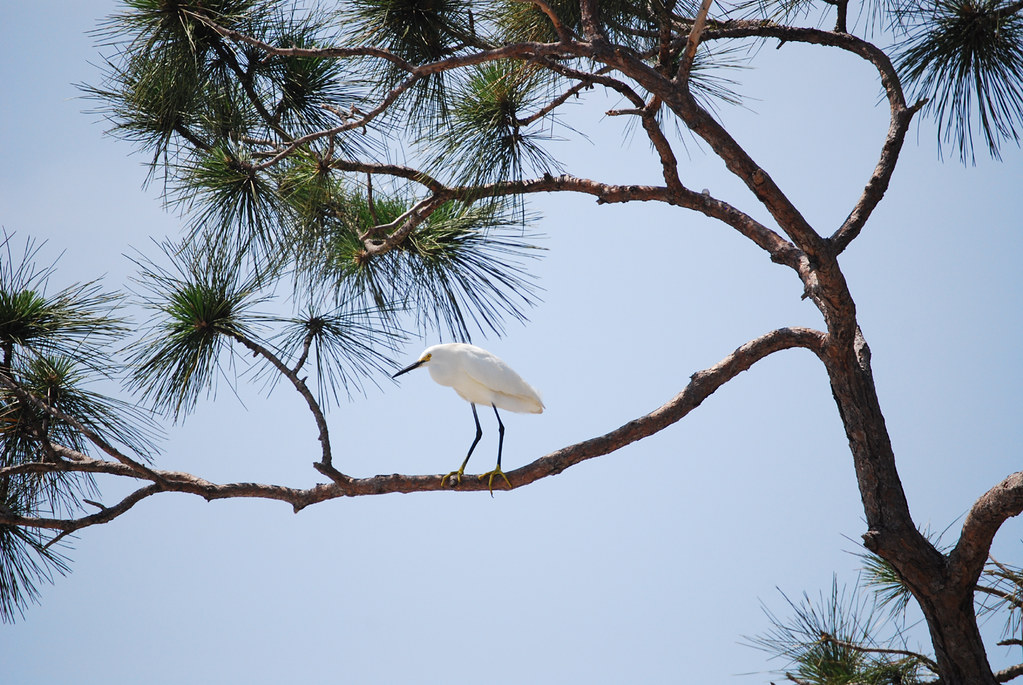
We made it to Fort DeSoto State Park about 1pm, a place known for shorebirds and as a location for Black-hooded Parakeets. We did not find the parakeets, but some careful scrutiny of shorebirds revealed an American Oystercatcher (ABA bird 383 for me) and a Snowy Plover (ABA 384, life bird 416)! After an hour and a half at the park, we followed some directions in Bill Pranty’s guide to a marina in St. Pete, and we drove around for a bit until we heard the screeching of parrots. We found a house with platform feeders and Monk Parakeets, along with a Snowy Egret in a pine tree and a Great Egret on their deck.
Suddenly, a big parakeet dropped down onto a platform feeder, and there it was – Black-hooded Parakeet, a recent addition to the ABA list, and now the most recent addition to my lists (ABA 385, life 417)! This was a big, good looking bird, and pretty vocal – this was the parakeet we heard that drew us to this location. The parakeet was also the only bird of the trip that was a life bird for everyone.
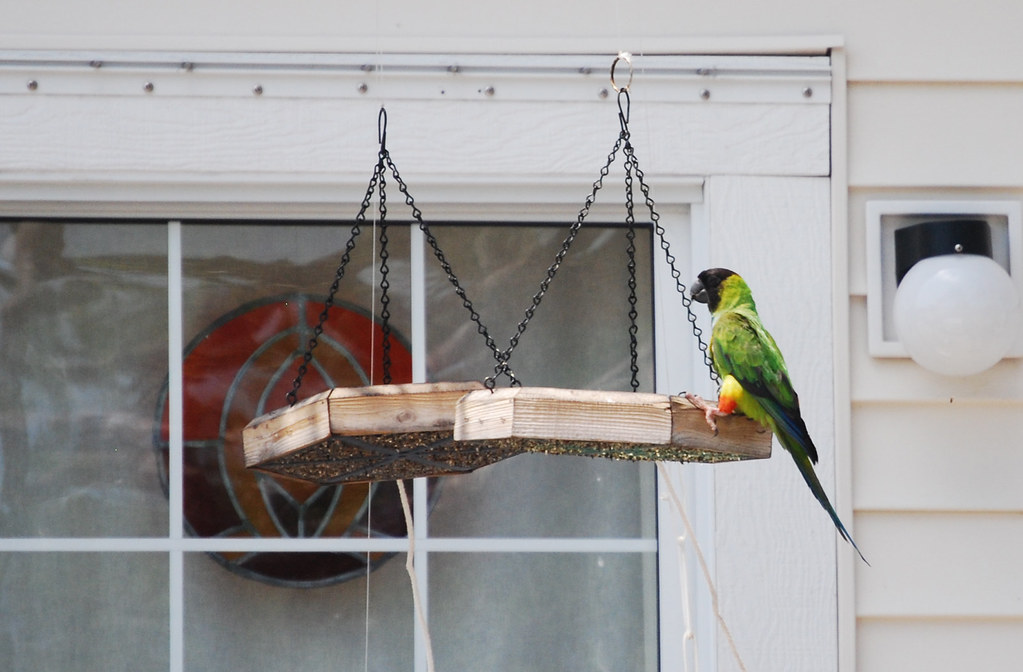
Black-hooded Parakeet, St. Petersburg
We headed north again, towards Hernando Beach and possibly the last place in Florida where there is an established population of wild Budgerigars, or Budgies. For a typical noisy psittacid, these guys were difficult to find, and we spent two and a half hours driving around a sleepy retiree neighborhood until, just as we were about to give up, a small flock flew overhead and perched in some bushes. This was our last target bird and closed out our trip, as we decided to head home a day early. I finished up the trip with a life list totaling 418 and an ABA list of 386, an increase of 46 birds. Overall, the trip was highly successful, with around 180 species observed and hitting almost all of our target birds, minus Greater Flamingo, White-tailed Kite, Cape Sable Seaside Sparrow, Red-crowned Parrot, White-winged Parakeet, and Fulvous Whistling-Duck.
Friday, May 30, 2008
Florida Trip, Day 6: May 15

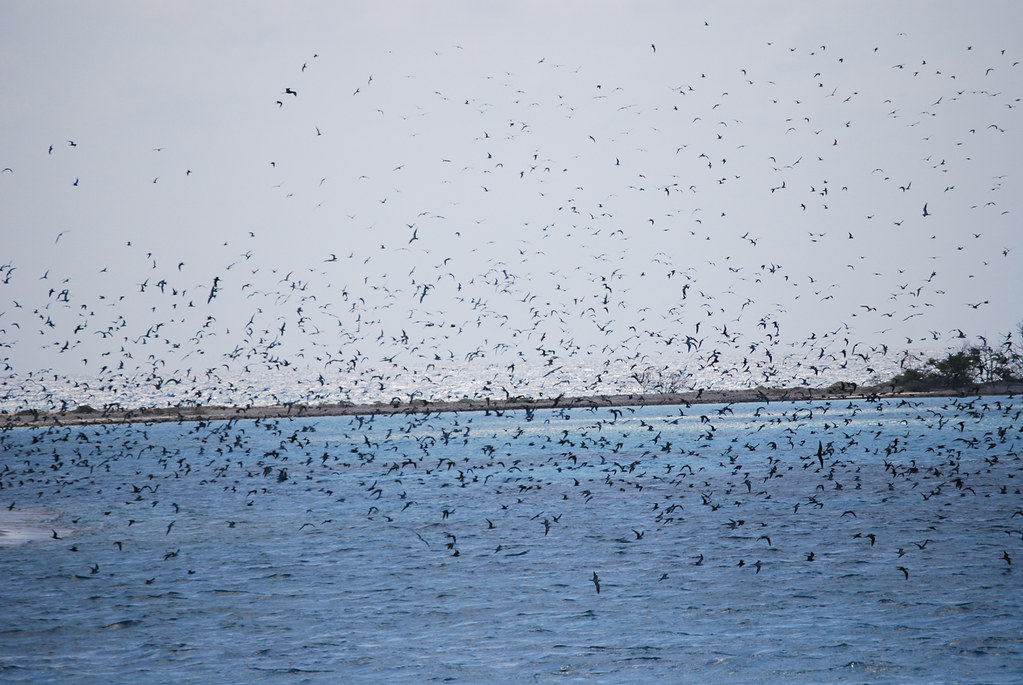 Huge swarm of terns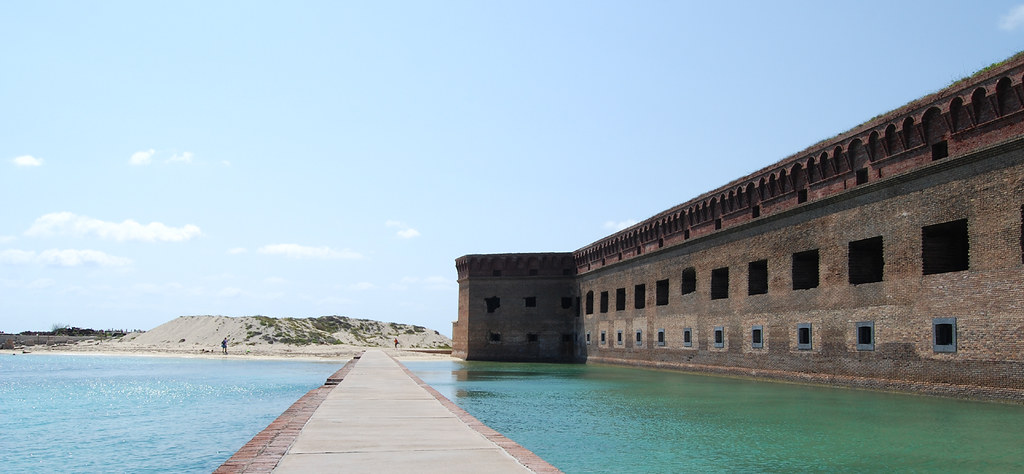
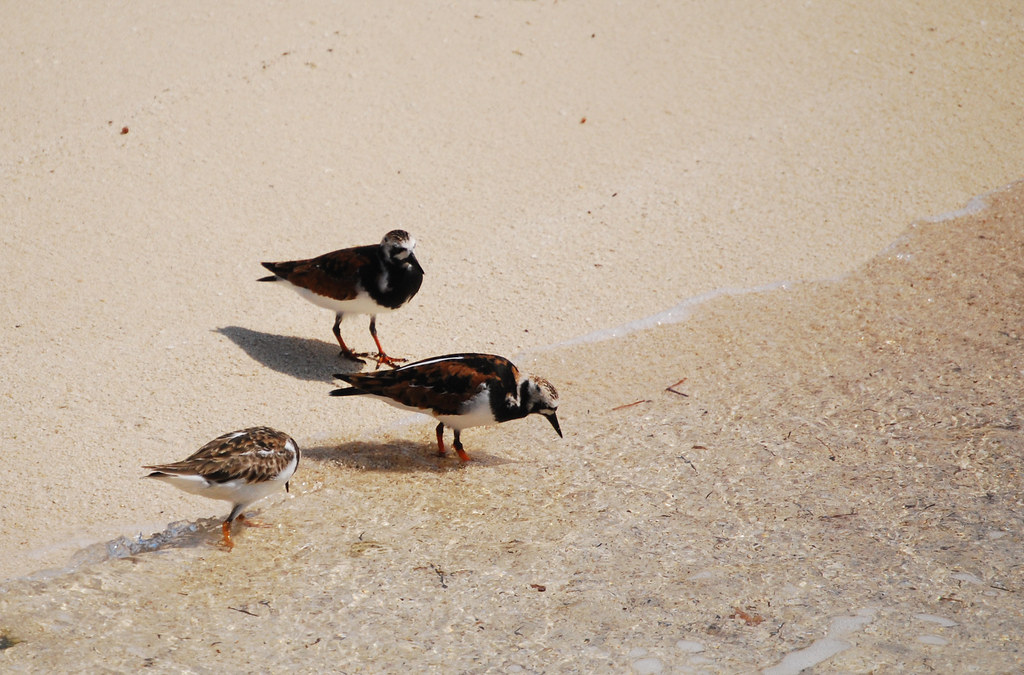
Our first order of business was to attempt to locate our two target birds: Black Noddy and Red-footed Booby, both of which had been reported recently. We set up scopes near the coal dock and spent some time scanning all the Brown Noddies, but no luck. We did add Indigo Bunting to our trip list at this point, though, and I got some decent photos of noddies and Magnificent Frigatebirds. We then set up on the dock next to the ferry and scanned Long Key for the Red-footed Booby, and again, no luck. We did have some nice company in the form of Ruddy Turnstones scurrying about our feet, though. Then it was time for lunch aboard the ferry (make your own sandwiches).
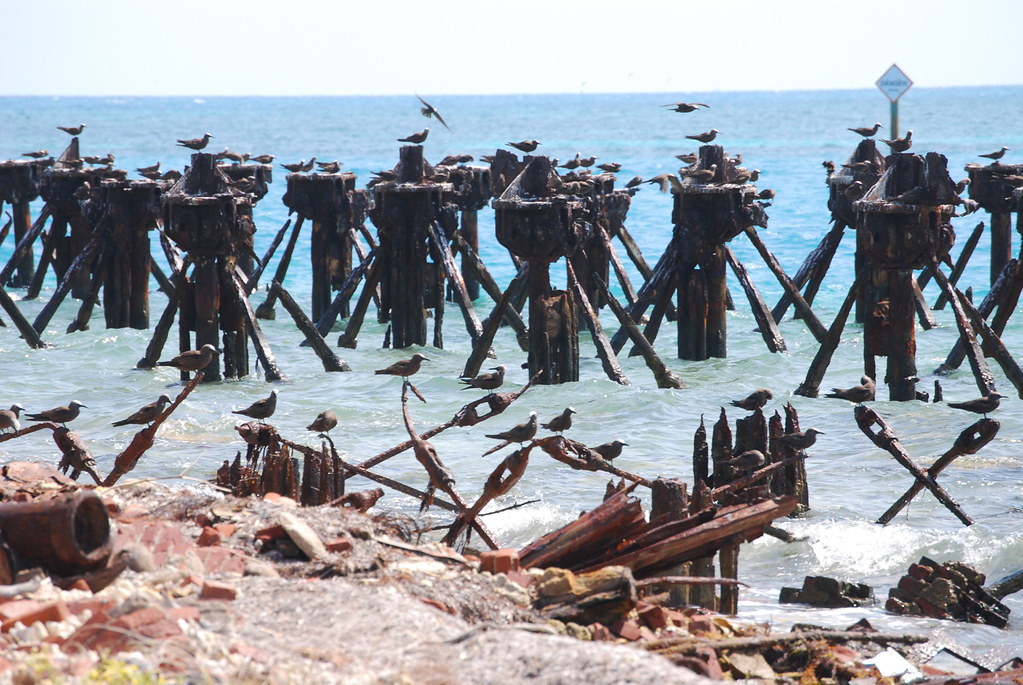
Brown Noddies on the coal dock
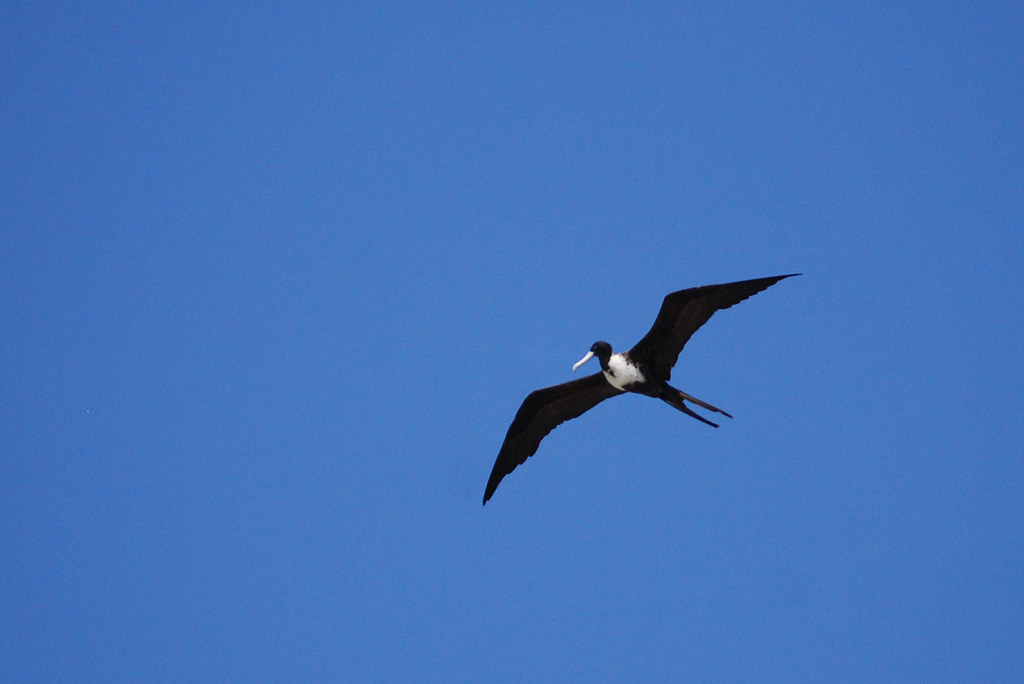 Magnificent Frigatebird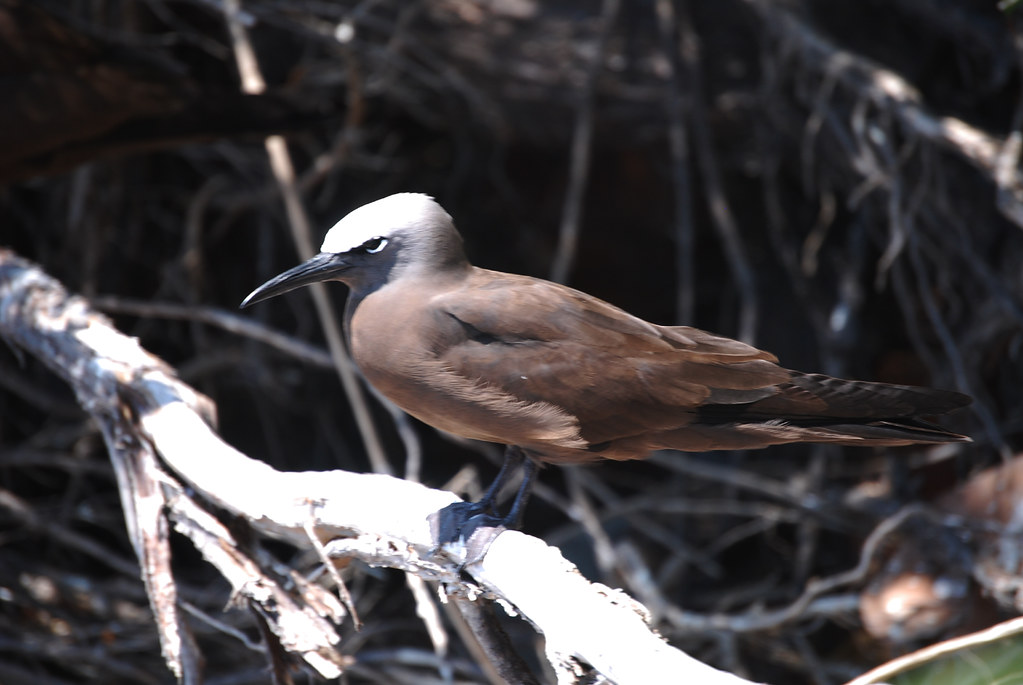
Brown Noddy

Cattle Egret looking for frail neotropical migrants to snatch up
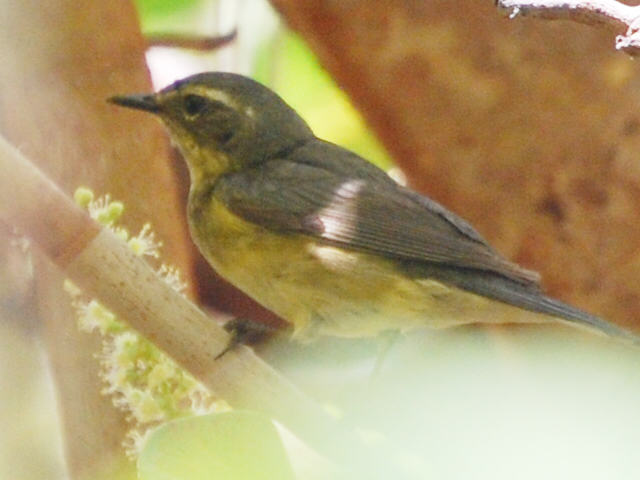
Female Black-throated Blue Warbler
 Scope Patrol
After some time, we finally picked out a juvenile Black Noddy from the surrounding Brown Noddies. This was a bird that was very subtle in its differences from its compatriots, being only slightly smaller, with a slightly longer bill. The bird also had some scalloping visible on the upperwing coverts, which was what first drew our attention to the bird. The white cap on its head was fairly bright, but to be honest, I couldn't really say in the bright sunlight that it was any more brilliant than a Brown Noddy's head. Still, the differences were real, and there was a fine life bird in the scope.
Satisfied with our Black Noddy, we left the battlements and headed back out to the dock, determined to find our Red-footed Booby. We set up the scopes again, and scanned the masses of nesting and roosting Magnificent Frigatebirds on Long Key. Finally, the bird was found! Perching with some frigatebirds on a dead tree, this was a juvenile Red-footed Boobie, which stood out from the black frigatebirds through its sandy plumage. Patient scrutiny through the scope was rewarded with views of the booby's distinctive bluish-gray, dagger-shaped bill, although it was too distant to make out leg color. No other booby features this color combination, so we were confident this was the bird. Success!
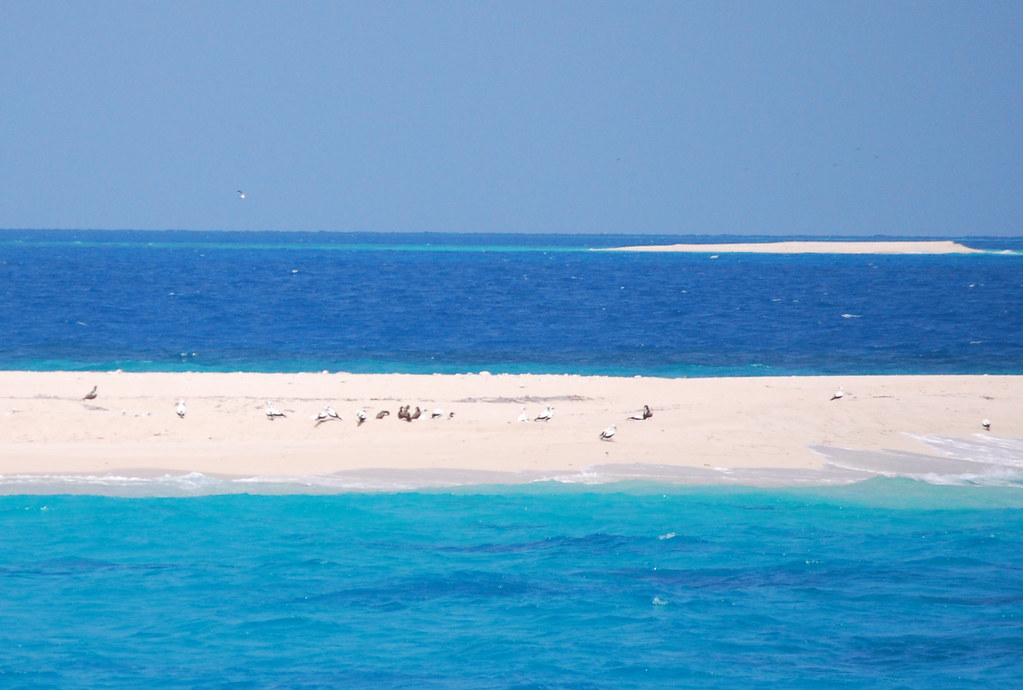 Masked Boobies on Hospital Key
Satisfied, we boarded the ferry and headed back to Key West, with a pause to examine the Masked Boobies nesting on Hospital Key, the only location in the United States where they do so. On the way back, I scanned and scanned the ocean, hoping for tropicbirds or even a Cory's Shearwater, but no more life birds for me today. Still, scanning was rewarding, as I saw a loggerhead turtle swimming at the surface and numerous flying fish. Only as we neared Key West did I realize one thing: I had forgotten to put any sunscreen on the back of my calves!
Thursday, May 29, 2008
Florida Trip, Day 5: May 14
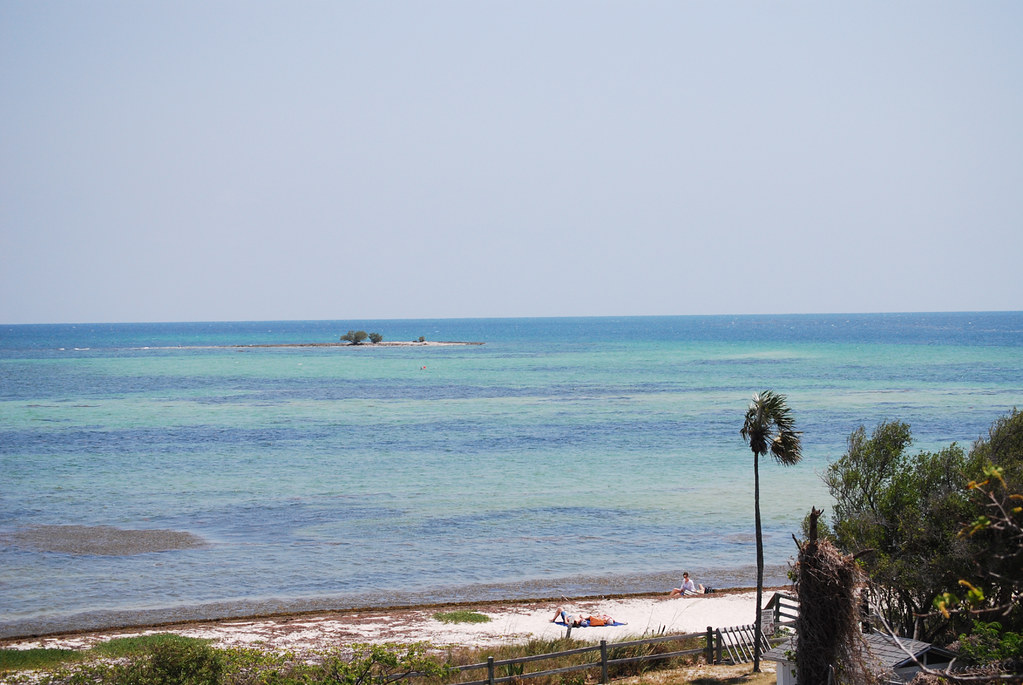
Birding the Florida Keys
Wednesday was spent exploring some local birdy spots in the Florida Keys and going after certain target birds. We hit locations on Key Largo, Big Pine Key, Lower Matecumbe Key, and Vaca Key. The morning started at Dagny Johnson Key Largo Hammock Botanical State Park, where we picked up another Mangrove Cuckoo, had great looks at a Black-whiskered Vireo, and I had my life White-crowned Pigeon. Otherwise, it wasn’t really too birdy, with the only new bird (besides the pigeon) a Blackpoll Warbler.
We then made our way down to Vaca Key and the town of Marathon, and hit a local golf course for Burrowing Owl ( a lifer) and visited a state office building complex that had Least Terns and Roseate Terns nesting on the roofs. We waited in the heat for a while, and finally had a pair of Roseate Terns show up (another lifer). After that, we decided to have lunch at a great local spot, Herbie’s. I highly recommend it.
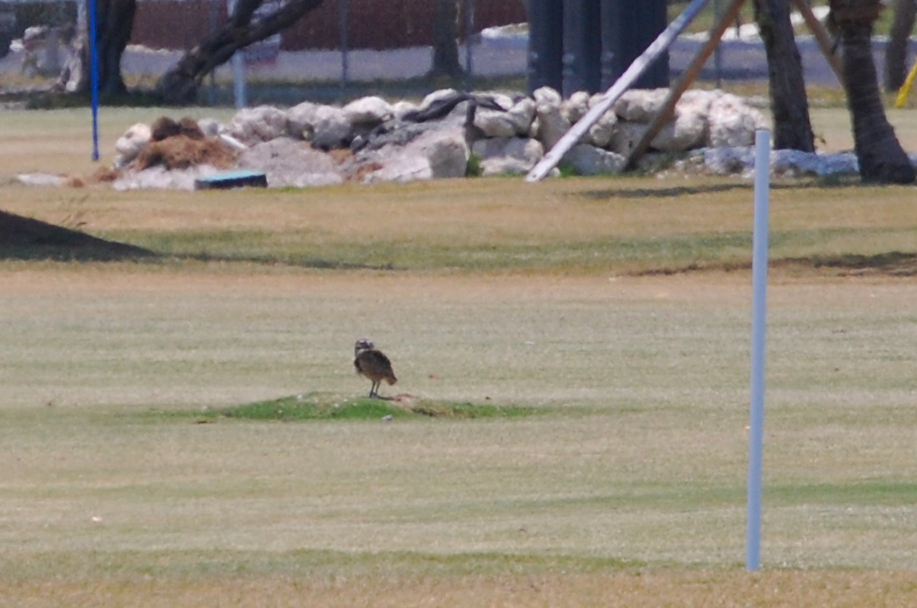
Burrowing Owl, Marathon
After lunch, it was on to Bahia Honda Key, which is a state park. Not much of interest there besides girls in bikinis, but I did get some good scenery photos and decent photos of Blackpoll Warblers.
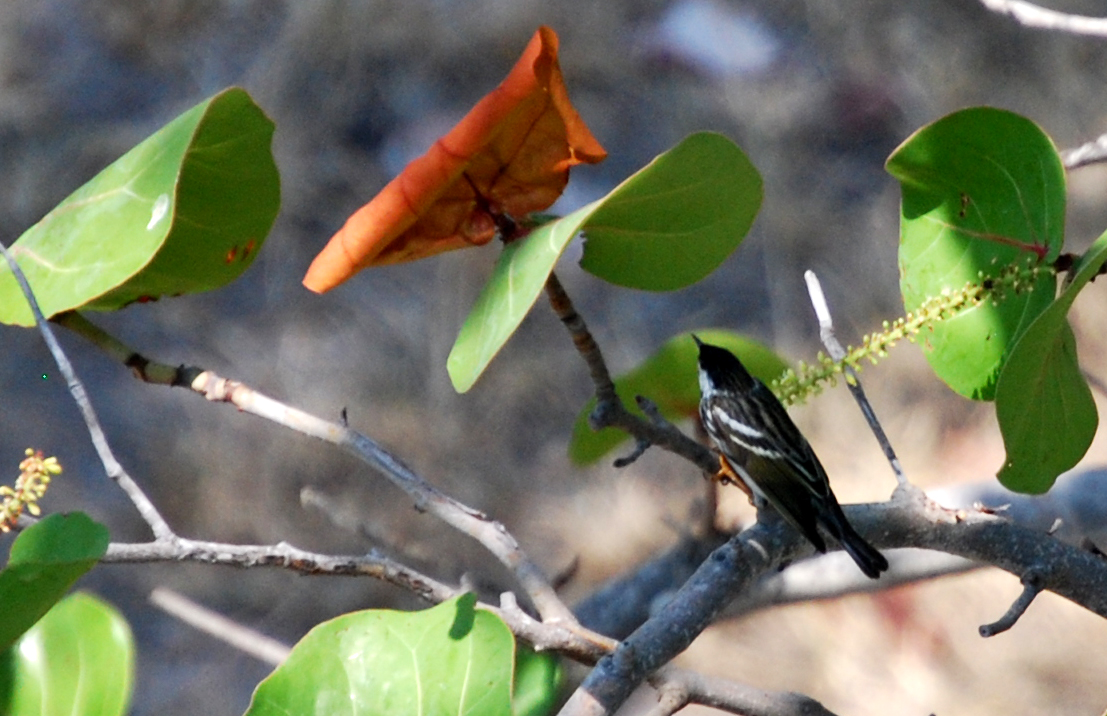
Blackpoll Warbler, Bahia Honda Key
We ended up in Big Pine Key and searched vainly for a motel that wasn’t charging $100 a night for a 2 bed room with no phone, but alas. This motel did have a pool, but it was being used by Common Grackles and Eurasian Collared Doves, so any desire for a refreshing dip was quelled.
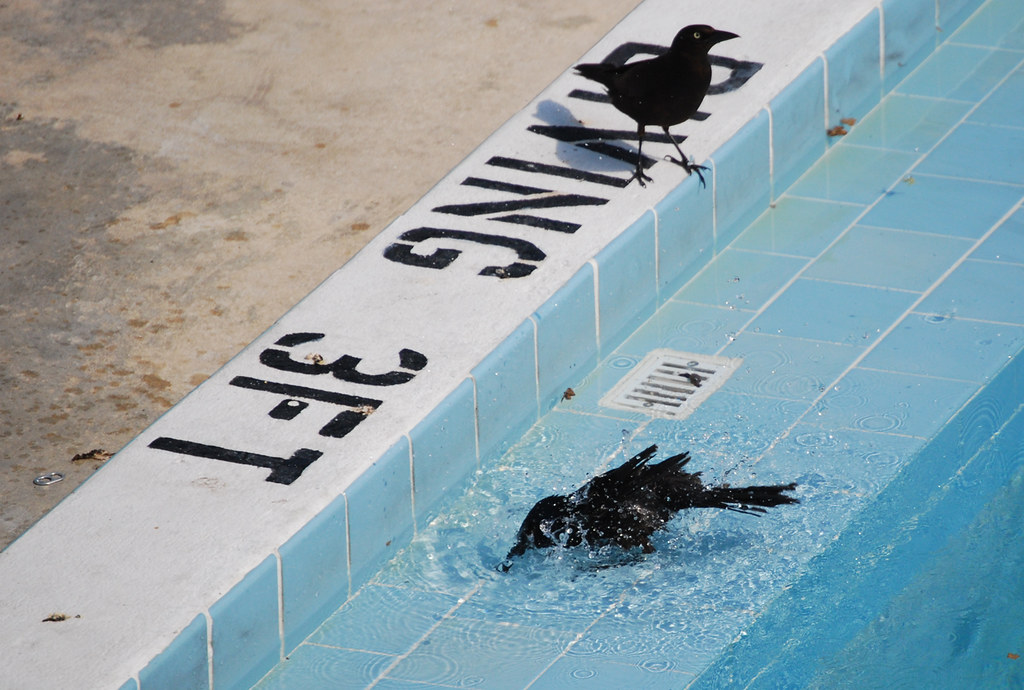
Common Grackles using the pool, Big Pine Key
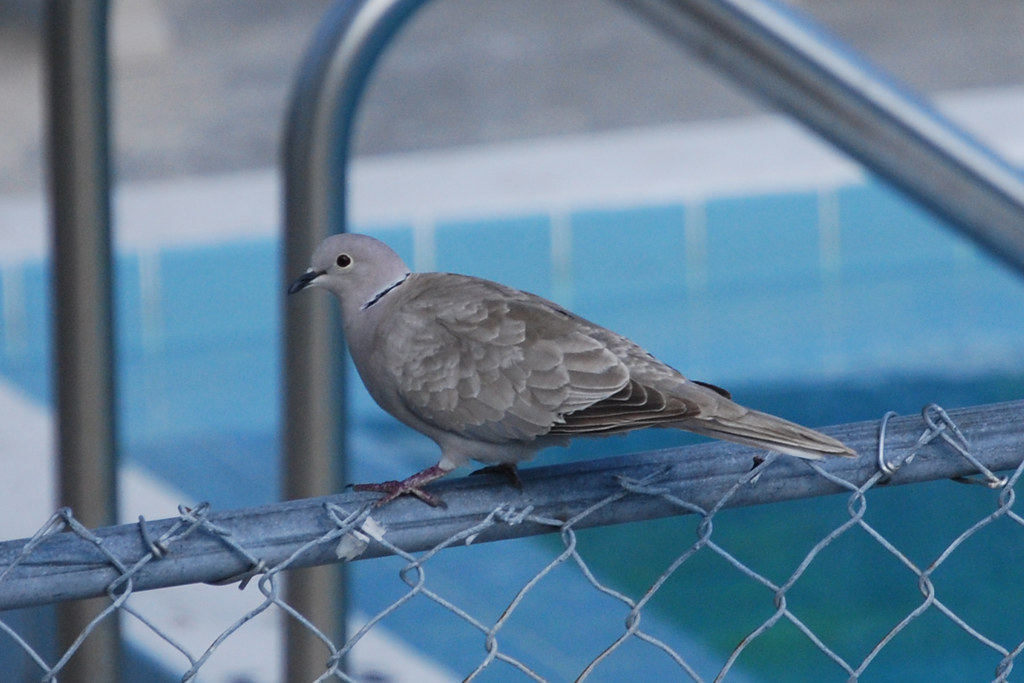
Eurasian Collared Dove, contemplating a dip
After a dinner of Cuban food, we drove back up to the Marathon Airport and camped out on a picnic table on the south side, awaiting dusk and my last life bird of the day – Antillean Nighthawk. Then it was back to the hotel, eagerly anticipating tomorrow’s destination: The Dry Tortugas!
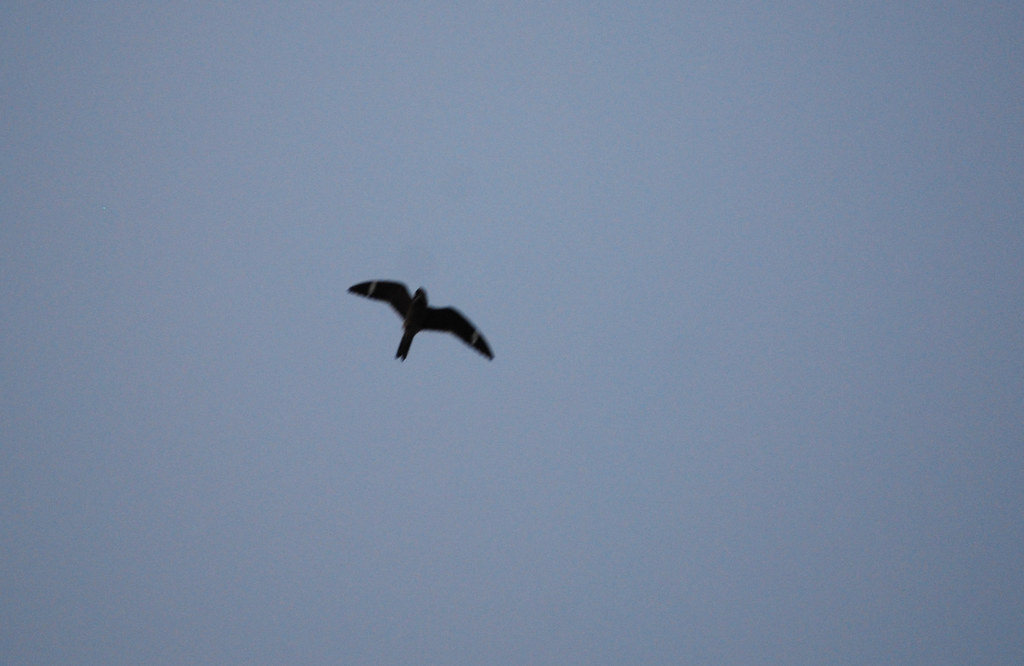
Antillean Nighthawk