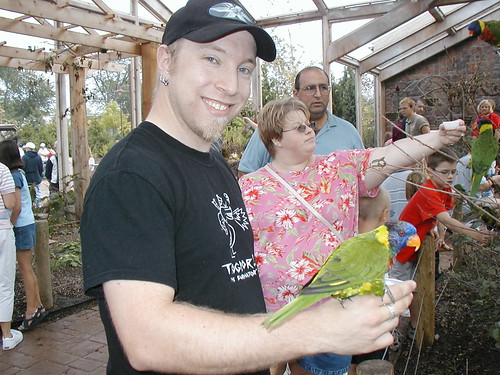
I've been wanting a new tripod for a while. The one that came with my Nikon is somewhat flimsy and has been missing a foot for over a year, and tends to tip over in a stiff breeze. My lovely wife has purchased for me a Manfrotto tripod - a low end model for about $130, but still a vast improvement over the current one. I hope to test it this weekend at some point - perhaps on Sunday, when I would like to do a little atlasing for the Ohio Breeding Bird Atlas. There's a couple "Priority Blocks" about 50 miles north of here that aren't getting coverage, and while I don't have the time to really devote to covering them, I can at least get some observations recorded for them.
That's about all, really. Haven't had a chance to get out much, what with the current family schedule. There's a possibility I will be spending a good chunk of the fall doing archaeology around marshy areas in Massachusetts, which would have the side effect of providing good opportunities for adding to my Mass. list. And of course, I'm going to the UP this August for a week, and hope to get some good birding in then as well.
Monday, June 22, 2009

Friday, May 15, 2009
More Magee birds
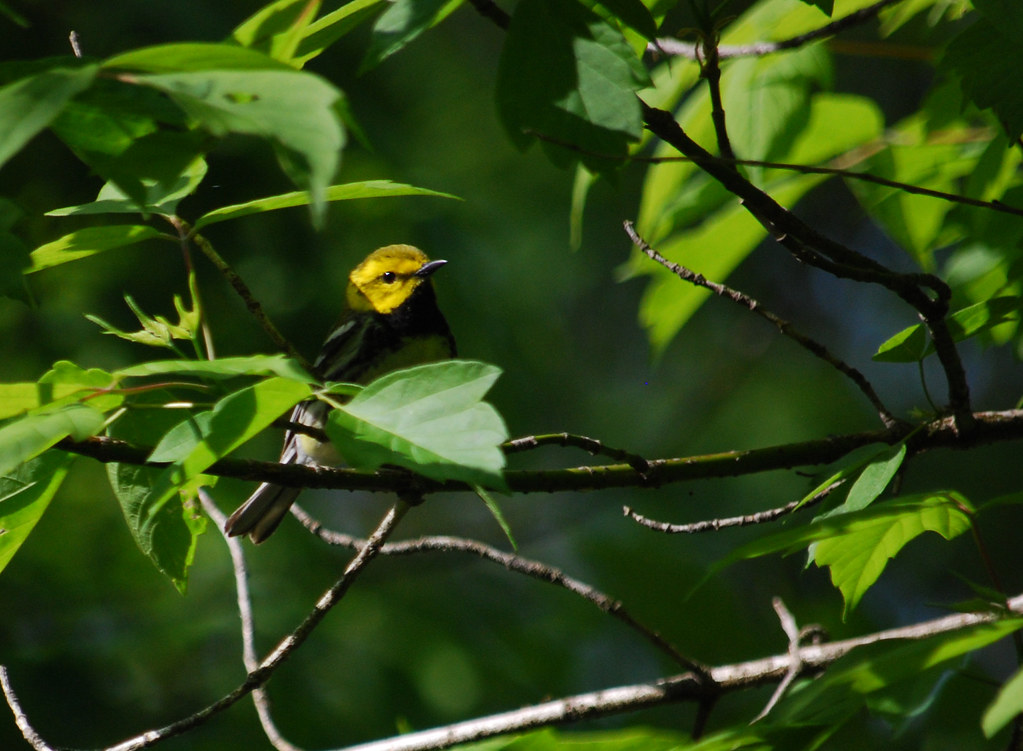
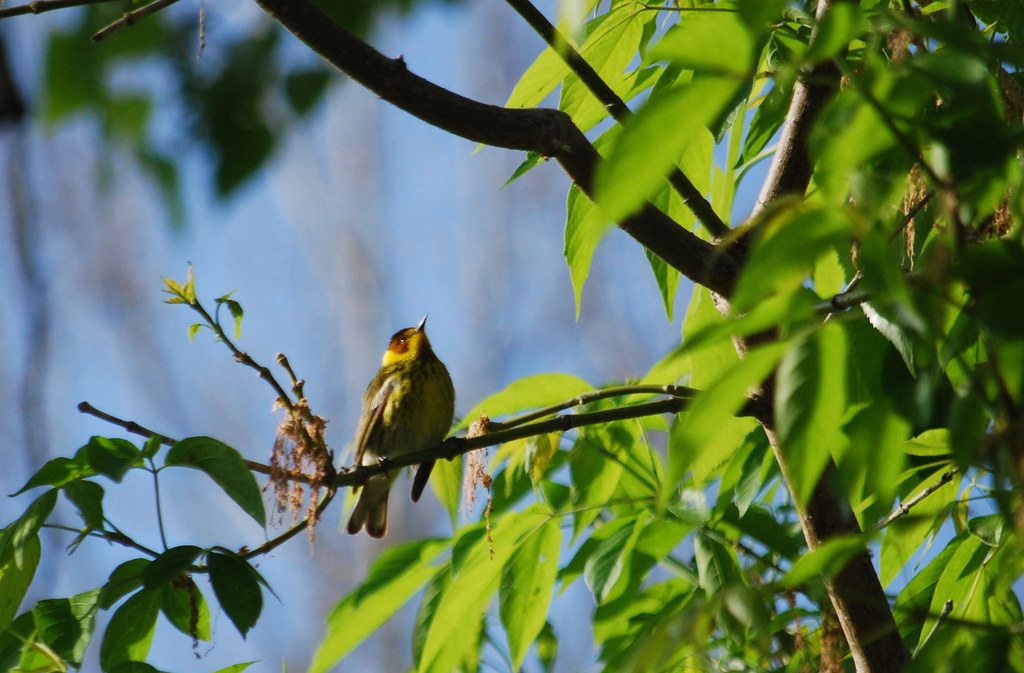
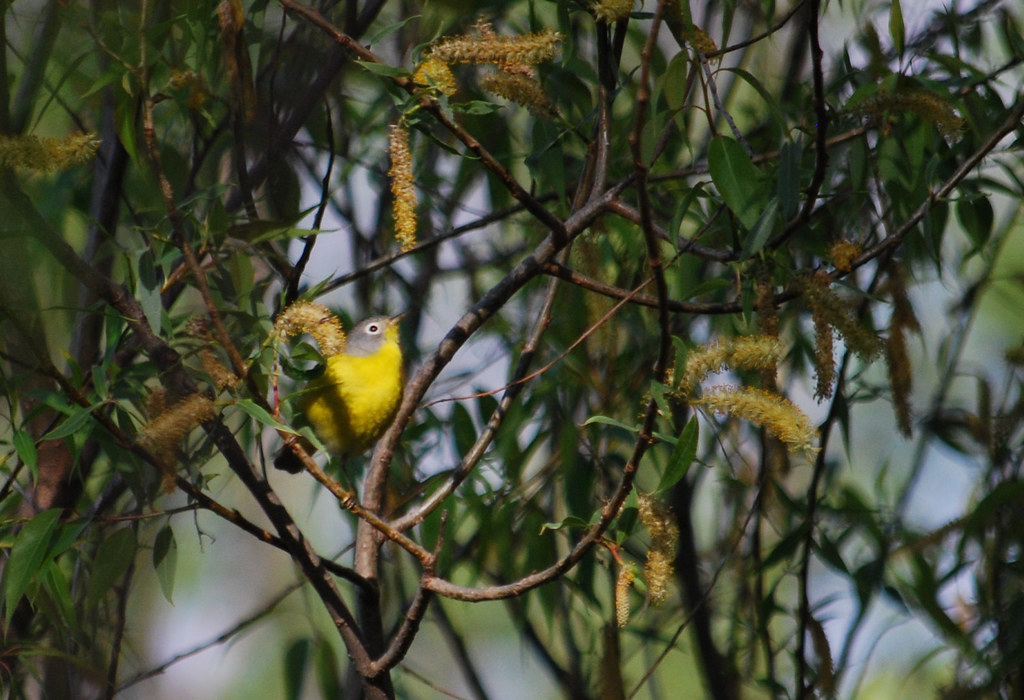
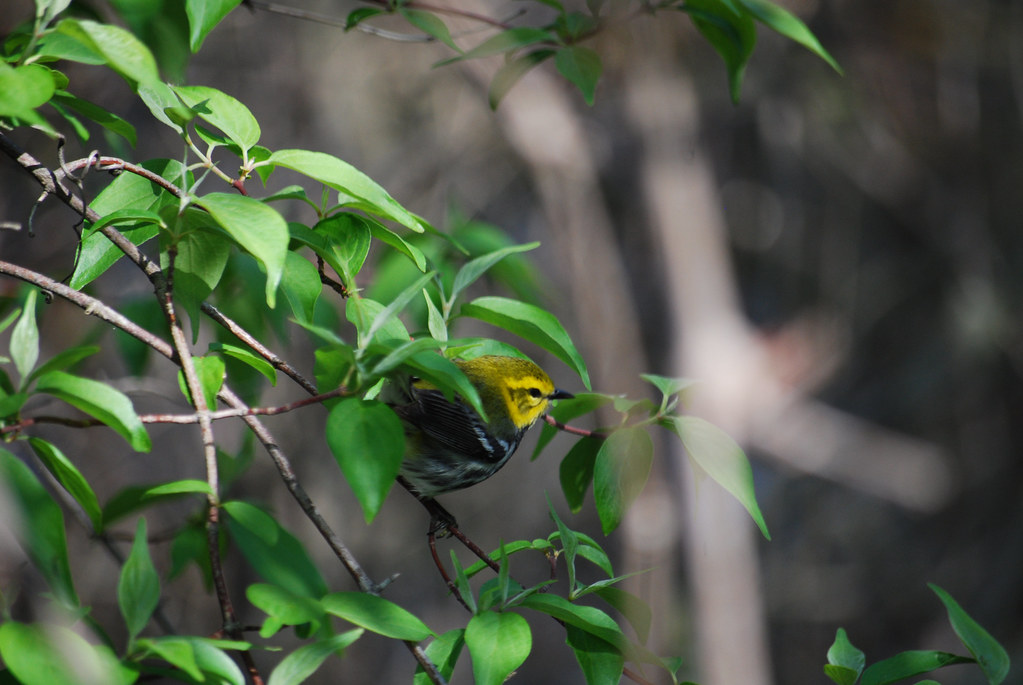
I had my best day ever for bird photography last Sunday, I think. Here's a couple of the highlights:
Black-throated Green Warbler

Cape May Warbler

Tree Swallow

Nashville Warbler

Black-Throated Green Warbler

Black-throated Green Warbler
Tree Swallow

Nashville Warbler
Black-Throated Green Warbler
Bird gets its own private beach
Check this out. The Maleo, a bird that only breeds on the island of Sulawesi in Indonesia, has been given it's own private beach for the nesting season. This bird buries its eggs in volcanic sand which incubates them, and when the young hatch, they are able to fly immediately - talk about precocious!
Here's the story:
http://news.yahoo.com/s/ap/20090515/ap_on_re_as/as_indonesia_bird_beach_3
Here's the story:
http://news.yahoo.com/s/ap/20090515/ap_on_re_as/as_indonesia_bird_beach_3
Tuesday, May 12, 2009
Golden-winged Warbler at Magee Marsh

Finally - one of the last warblers on my Ohio list, and a life bird to boot! I saw this guy on Sunday at Magee Marsh. At first it was fairly far out, but then came in really close and I got halfway decent photos. This bird in number 460 for ABA, 303 for Ohio.
Friday, April 24, 2009
Wow -two months between posts!
I guess fatherhood will do that to you. I didn't do a whole lot of birding in the last two months, but I have done some quality birding! First off, I picked up another life bird last Saturday, Smith's Longspur (ABA 459) near Rockford, Ohio (Making it Ohio 301). A good sized flock of birds was feeding in a corn field and many birders got to see them. On the same day, I finally got my Ohio Eurasian Collared-Dove (302) and as a great bonus, the bird we saw was carrying nesting material. This observation, it turns out, is the best breeding evidence yet for these birds in Ohio, so there's a little bit of ornithological history that I got to be a part of.
Of course, there's lows with the highs: I was unable to get away to see Ohio's first record Golden-crowned Sparrow, and Ohio's second Mountain Bluebird. Funnily enough, it was pretty much work that got in the way of me going after these birds, not parenthood!
Tomorrow is the big warbler day for me - the Columbus Avids annual end of April trip to Shawnee State Forest near Portsmouth. And we're going to have a nice sunny day. AND - there's been a huge wave of migrants that just showed up last night, so they should be dripping off the trees down there! I'm nearly giddy with anticipation, especially since I haven't seen even a Yellow-rumped Warbler this year.
Well, hopefully I will get off my ass and post some more this weekend about the Shawnee trip, and perhaps not let months go by between posts again!
Of course, there's lows with the highs: I was unable to get away to see Ohio's first record Golden-crowned Sparrow, and Ohio's second Mountain Bluebird. Funnily enough, it was pretty much work that got in the way of me going after these birds, not parenthood!
Tomorrow is the big warbler day for me - the Columbus Avids annual end of April trip to Shawnee State Forest near Portsmouth. And we're going to have a nice sunny day. AND - there's been a huge wave of migrants that just showed up last night, so they should be dripping off the trees down there! I'm nearly giddy with anticipation, especially since I haven't seen even a Yellow-rumped Warbler this year.
Well, hopefully I will get off my ass and post some more this weekend about the Shawnee trip, and perhaps not let months go by between posts again!
Wednesday, February 25, 2009
Birding into history
I've signed up to transcribe data for the USGS Bird Phenology Program (http://www.pwrc.usgs.gov/bpp/index.cfm). Here's the project summary from the website:
"The North American Bird Phenology Program houses a unique and largely forgotten collection of six million Migration Observer Cards that illuminate migration patterns and population status of birds in North America. These handwritten cards contain almost all of what was known of bird status from the Second World War back to the later part of the 19th century. The bulk of the records are the result of a network of observers who recorded migration arrival dates in the spring and fall that, in its heyday, involved 3000 participants.
Today, those records are being processed and placed into a modern database for analysis. This information will be used, along with recently collected arrival times of migrant birds, in conjunction with historical weather data to show how migration is affected by climate change. The information from this analysis will provide critical information on bird distribution, migration timing and migration pathways and how they are changing. There is no other program that has the depth of information that can help us understand the effect that global climate change has on bird populations across the country."
Essentially, you enter in data from scanned observation cards dating all the way back to the 1880s. You can come across some really interesting observations, too. Today I transcribed a card that was documenting a Great Grey Owl specimen taken in NW Indiana in 1897, for example. It's also neat to see the old names for birds, such as Long-billed Marsh Wren (today just the Marsh Wren), and it's easy to start feeling a connection to these long-ago birders.
One big advantage for me in doing this is that I feel that I am doing some form of birding at this point in my life where birding on a regular basis isn't really an option, so that helps cut back the birding fever. Hopefully by the time spring migration is in full blast, I'll have less problems getting back into the field, but for now, it's the lab!
"The North American Bird Phenology Program houses a unique and largely forgotten collection of six million Migration Observer Cards that illuminate migration patterns and population status of birds in North America. These handwritten cards contain almost all of what was known of bird status from the Second World War back to the later part of the 19th century. The bulk of the records are the result of a network of observers who recorded migration arrival dates in the spring and fall that, in its heyday, involved 3000 participants.
Today, those records are being processed and placed into a modern database for analysis. This information will be used, along with recently collected arrival times of migrant birds, in conjunction with historical weather data to show how migration is affected by climate change. The information from this analysis will provide critical information on bird distribution, migration timing and migration pathways and how they are changing. There is no other program that has the depth of information that can help us understand the effect that global climate change has on bird populations across the country."
Essentially, you enter in data from scanned observation cards dating all the way back to the 1880s. You can come across some really interesting observations, too. Today I transcribed a card that was documenting a Great Grey Owl specimen taken in NW Indiana in 1897, for example. It's also neat to see the old names for birds, such as Long-billed Marsh Wren (today just the Marsh Wren), and it's easy to start feeling a connection to these long-ago birders.
One big advantage for me in doing this is that I feel that I am doing some form of birding at this point in my life where birding on a regular basis isn't really an option, so that helps cut back the birding fever. Hopefully by the time spring migration is in full blast, I'll have less problems getting back into the field, but for now, it's the lab!
Wednesday, February 11, 2009
Checking in
Well, no new bird news to report on the home front - mainly because I'm the father of a baby boy!
Ian Michael Sewell was born January 30, 2009 at 2:41 in the afternoon. His first bird was a starling!
I don't foresee myself getting out to bird this month, as we're still settling in with Ian and trying to get caught up with errands and chores, since he decided to come a week early. I think I will be able to get out more in the coming months, though, and even go on a few Avids trips, which will be all the more fun since I won't be going on as many of them. My work on the Ohio Breeding Bird Atlas will probably come to a standstill this year, though. I just don't think I'll have the time and energy for concentrated survey work.
Anyhow, I'm still alive, and looking at the neighborhood birds, and thinking of spring!
Ian Michael Sewell was born January 30, 2009 at 2:41 in the afternoon. His first bird was a starling!
I don't foresee myself getting out to bird this month, as we're still settling in with Ian and trying to get caught up with errands and chores, since he decided to come a week early. I think I will be able to get out more in the coming months, though, and even go on a few Avids trips, which will be all the more fun since I won't be going on as many of them. My work on the Ohio Breeding Bird Atlas will probably come to a standstill this year, though. I just don't think I'll have the time and energy for concentrated survey work.
Anyhow, I'm still alive, and looking at the neighborhood birds, and thinking of spring!
Subscribe to:
Posts (Atom)